
by admin
Share
by admin
Share
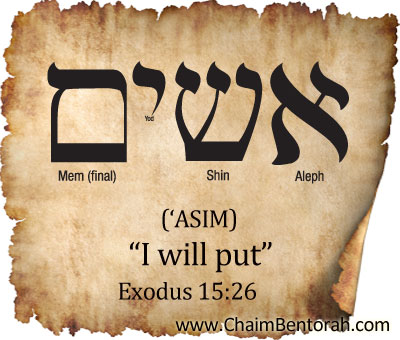
HEBREW WORD STUDY – I WILL PUT – ‘ASIM אשׁימ
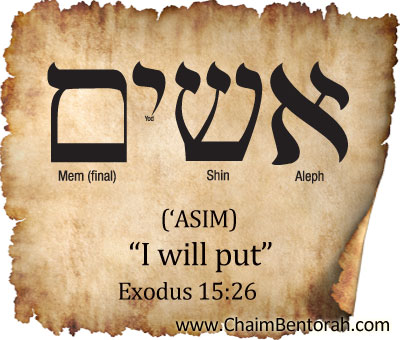
Exodus 15:26: And he said: If thou wilt diligently harken unto the voice of God and will do that which is right in His sight, and will give ear to His commandments and keep all His statutes, I will put none of these diseases upon thee.
 Some faith healer or Word-Faith teacher once taught and likely still do that the Hebrew says God will only allow the diseases to come upon us and as this teaching passed from teacher to teacher it went through an evolutionary process. Soon teachers began to impress their audiences by throwing out Hebrew terms and of course if you don’t know Hebrew and the old boy has a platform he must be a Hebrew expert and you can’t argue against that. What they started to say was that in the Hebrew this is in a permissive tense. There is no such thing as a permissive tense in Hebrew.
Eventually, these teachers started to teach that the verb put was in a permissive tense rather than a causative tense but since there was no way to express the permissive tense in English translators put it in the causative tense. Huh? As their authority, they threw out the name of a Hebrew scholar, Dr. Robert Young. When I heard that I began to understand how they came up with this teaching. I made a study of Dr. Young’s work while doing my doctoral dissertation. He is indeed a distinguished Hebrew scholar.
Dr. Robert Young did a controversial work on the use of the Jussive form in the Hebrew. Unfortunately, his conclusion was picked up by teachers who had no background in the study of Biblical Hebrew but did have a large audience and they applied his theory to Exodus 15:26 which became a sensational hit among faith healers and the Word-Faith movement. This misunderstanding got passed on from one faith healer to another who did not check their sources and it eventually evolved to a teaching of a permissive tense and actually began to take on the form of some sort of conspiracy by Bible translators to cover up God’s true intentions with regard to healing.
Here is where the misunderstanding lies. As simply as possible, in Hebrew, there are three volitional forms or three expressions of will – Jussive which is generally found in the first person, Imperative which is found in the 2nd person and Cohortative which is used in a third person. These volitional forms can express a speaker’s desire, wish or command. The Jussive may occur in the third person when the verb is in an imperfect state. Unfortunately, there is nothing to distinguish a Jussive from an imperfect tense.
Dr. Robert Young presents the idea that the verb put in Exodus 15:16 is in a Jussive form. He made the mistake, and as a true scholar, he openly admitted to that mistake of calling it a permissive form. What he meant was that this particular Jussive could be rendered as permissive. Teachers not schooled in Hebrew picked up on this and called it a permissive tense. For one thing, we are not talking about a tense, tenses do not exist in Hebrew and as I said there is no such thing as a permissive form in Hebrew.
A Jussive form expresses the will of the speaker, in other words, it is God’s will to put diseases upon people. The status, position, and context of the speaker, will determine the nature of the expression of the speaker’s will. It may be a command, a request or a wish. Dr. Young for various reasons determined that this verb put is in a Jussive form was expressing permission.
I tend to disagree with Dr. Young as he did not consider the use of the Jussive in other Semitic languages. For instance, the Canaanite dialect which preceded the Hebrew will often derive the Jussive from the short yaqtul form. The verb asim (I will put) is found in the long form and not the short and would thus lay a serious question that this is truly a Jussive form. Just because it is in a third person and imperfect tense does not automatically make it Jussive as Dr. Young seems to indicate. I am not the only one here, most Hebrew scholars take serious issue with Dr. Young in his use of the Jussive.
Secondly, let’s just assume it is in a Jussive form, this would not mean it is permissive, it could simply be an expression of a desire or wish. You have a lot of hoops to jump through just to get this to a permissive state. I think we are better off and more grammatically sound to just keep this as the KJV puts it, that is “He will put none of these diseases upon you.”
I wish I could say God will not permit these diseases to come upon you, but I can’t, I’m sorry.
STAY IN THE LOOP
Subscribe to our free newsletter.
Leave A Comment
Hebrew Word Study – A Passion – B’ir – Beth Ayin Yod Resh Song of Solomon 3:3, “The watchmen that go about the city found me: Saw ye him who my soul loveth?” “Ich bin ein Berliner” John F. Kennedy, June 26. 1963. Translation, “I am a jelly filled donut.” There is an urban legend
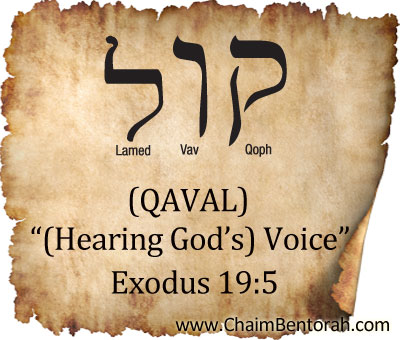
HEBREW WORD STUDY – (HEARING GOD’S) VOICE – QAVAL קול Exodus 19:5: Now therefore if you will obey my voice indeed and keep my commandments, Then you will be a peculiar treasure unto me above all the people, for all the earth is mine.” What caught my attention in this verse is the thought that
-
Hebrew Word Study – A Sensitive Nature – Pathah – Pei Taw Hei פתה Psalms 116:6: “The Lord preserves the simple, I was brought low and He helped me.” Hebrew Word Study – A Sensitive Nature – Pathah – Pei Taw Hei Psalms 116:6: “The Lord preserves the simple, I was brought low and He
WORD STUDY – ABBA אבא Mark 14:35-36: “And he went forward a little, and fell on the ground, and prayed that, if it were possible, the hour might pass from him. And he said, Abba, Father, all things are possible unto thee; take away this cup from me: nevertheless not what I will, but what