
by admin
Share
by admin
Share
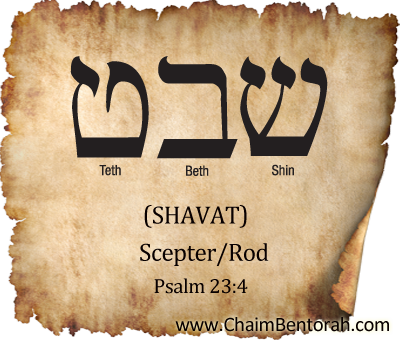
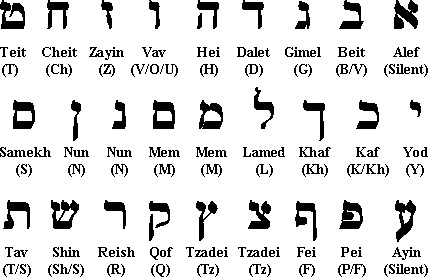
Hebrew word study – scepter/rod – shavat שבט shin beth teth
Psalms 23:4: “Yea though I walk through the valley of the shadow of death, I will fear no evil for thou art with me, thy rod and thy staff they comfort me.”
Just to recap, I am not following the shepherding motif of this Psalm or poem where we seek to relate everything to a shepherd and his sheep. In the next verse, we have the Lord preparing a table before the Psalmist in the presence of his enemies. A shepherd really didn’t have many enemies for the motif breaks down. It is not wrong to follow a shepherding motif but a poem can have more than one motif, at least in Semitic poetry. Since everyone and their mother has written about Psalms 23 using the motif of a shepherd and sheep, I would like to follow the road less traveled and use our life’s journey as the motif.
This would allow us a broader understanding of the next phase in the verse, “thy rod and thy staff they comfort me.” We usually interpret the rod and staff as a shepherd’s tools that he carries so I will not waste any time treading over this well-traveled road. Instead, let’s veer off onto the road less traveled. Let’s forget for a moment all this shepherd and sheep stuff. Odds are that none of us will ever be a shepherd.
The closest I have come to a shepherd was my grandfather who was a shepherd in his early youth and when I spoke with him about the different things I read in commentaries that a shepherd did that related to Psalms 23 he appeared quite puzzled. For one thing, grandpa never carried a staff or rod, he never made his sheep lie down in green pastures. He did lead this to waters, however. My grandfather who worked as a shepherd in Montana at the turn of the 20th Century lived in a plain shepherd’s wagon and made good use of a couple of dogs to herd the sheep. My point is that few, if any of us, can really be related to this Psalms from a shepherd’s point of view. However, we can certainly relate to this Psalm from our life’s journey which is what I am attempting to do.
We all know from our phony Sunday School pictures that shepherds carried a cane-shaped rod that was about a foot taller than the shepherd. He used the crook of the rod to capture a wandering sheep. Grandpa never used such a device, he had a couple of well-trained sheepdogs that kept his sheep in line. As far as a rod to fend off predators, he had the newest thing in technology, a Remington automatic invented in 1906. He still had it in his gun case for me to observe when I was growing up. He also packed a colt pistol.
Would you like Chaim Bentorah as your personal Hebrew teacher?
|
|
So, let’s just look at this rod business from a non-shepherding standpoint, from something we can relate to. The word rod is really the word that represents the shepherd staff. In the Hebrew it is shavat. In its Semitic root, it is a measuring stick. The shepherd would use his shavat to measure the growth of his sheep, distance from danger etc. We would call that a yardstick or ruler today. A shavat is really used for measuring. God measures us up and because of the finished work of Jesus, we are not found wanting. As I approach these later years of my life, knowing that my life’s journey will soon end, His rod or measuring stick is indeed a comfort for I know He is measuring me in light of the finished work of Jesus and that when I pass from this world, I have the assurance I will be with him.
The word is also used for a scepter. If this Psalm was written by David, he would be well versed in the use of a scepter as David was also a king who carried a scepter. In Proverbs 13:24 we find: “He that spareth his rod hateth his son: but he that loveth him chasteneth him betimes.” Note Esther 8:4; “Then the king held out the golden sceptre toward Esther. So Esther arose, and stood before the king,” Here the king extended his scepter to Esther. We all know this story, if the king did not extend the scepter, poor Esther would have been toast. She broke all protocols entering the king’s presence without being summoned which would have been automatic execution. It was the king’s decision to put her to death for breaking this protocol or to extend mercy. He chose to extend mercy. That word scepter is the same word used in Proverbs 13:24 for the rod that the father would spare. The word spare in Hebrew is chasek which means to withhold. We could properly translate this as the father who withholds the scepter from his son hates his son. I don’t believe this passage should be rendered in the way it is traditionally used to suggest that the rod is to be used to beat a child. The word shavat is never used to inflict pain upon anyone, people or sheep. The shavat was to measure or to make a determination or decision.
A king would speak very little to his subjects when in the throne room. He would often show his intentions with his scepter. It was his symbol of authority. He would often give his scepter to a trusted servant to carry out a message or order and the very presence of the scepter was the proof that this order was given under the authority of the king.
Remember Solomon who wrote Proverbs 13:24 was himself a king and I believe he was speaking of a father who was and is to be an authority figure to his son. If the father figuratively withholds the scepter from his son it would mean his son was to be punished for some act of disobedience. However, if he extends the scepter like the king did for Esther, it would show that he would extend mercy and forgiveness. Basically, Solomon is not telling fathers to beat their sons with a rod but to extend mercy and forgiveness to his son like God extends mercy and forgiveness to us when we disobey. To extend mercy is the sign of showing love. The father is further encouraged to correct his son and instruct. If we examine other passages that deal with this topic of a father correcting his son you will find quite an alternative translation from the Hebrew that would be just as correct grammatically and Hebraically as the traditional translation.
Again, the rod that we find in Psalms 23:4 could be translated as a scepter. God as our king will always extend His scepter to us no matter how much we disobey, just like the king did for Esther who extended his shavat to show her mercy because he loved her. God extends his scepter to us to show us mercy because he loves us and that love provided an escape from the penalty of our sin or disobedience through God’s own Son, Jesus Christ, who already paid the penalty for our sins.
We need never fear as we journey through this shadow world, through the valley of the shadows for God is with us not only with us but He has extended his scepter to us to show us His mercy.
Hi there! Thank you for reading this Daily Word Study. Can I ask a favor? Share this Daily Word Study with your friends on Facebook and Twitter by clicking one of the icons below.
Thanks & Blessings, it means a lot to me!
STAY IN THE LOOP
Subscribe to our free newsletter.
Leave A Comment
Hebrew Word Study – A Passion – B’ir – Beth Ayin Yod Resh Song of Solomon 3:3, “The watchmen that go about the city found me: Saw ye him who my soul loveth?” “Ich bin ein Berliner” John F. Kennedy, June 26. 1963. Translation, “I am a jelly filled donut.” There is an urban legend
HEBREW WORD STUDY – (HEARING GOD’S) VOICE – QAVAL קול Exodus 19:5: Now therefore if you will obey my voice indeed and keep my commandments, Then you will be a peculiar treasure unto me above all the people, for all the earth is mine.” What caught my attention in this verse is the thought that
-
Hebrew Word Study – A Sensitive Nature – Pathah – Pei Taw Hei פתה Psalms 116:6: “The Lord preserves the simple, I was brought low and He helped me.” Hebrew Word Study – A Sensitive Nature – Pathah – Pei Taw Hei Psalms 116:6: “The Lord preserves the simple, I was brought low and He
WORD STUDY – ABBA אבא Mark 14:35-36: “And he went forward a little, and fell on the ground, and prayed that, if it were possible, the hour might pass from him. And he said, Abba, Father, all things are possible unto thee; take away this cup from me: nevertheless not what I will, but what