
by admin
Share
by admin
Share
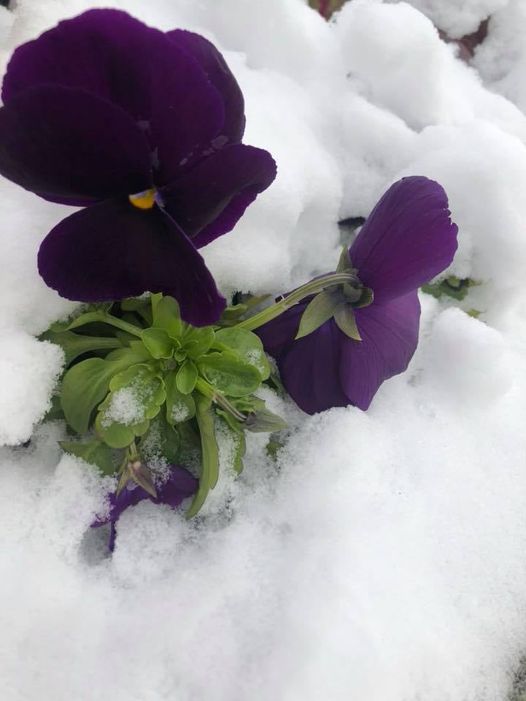
Hebrew Word Study – Winter חָרַף
The word “winter” חָרַף when spelled in reverse is פָּרַח ,a word for “blossoming“. It is a reminder that there is a purpose to every season and that at the end of its cycle, there will be flowers that blossom and fruit that yields!Would you like Chaim Bentorah as your personal Hebrew teacher?
|
|
If you would like to see more verse studies on the Song of Solomon, check out my S.O.S. course study at The All-Access Learning Channel, I’ll leave the link in the comments below.
Blessings, Laura

Here’s the link to check out the Song of Solomon Course:https://steve-s-school-acb2.thinkific.com/courses/song-of-solomon
Here’s the link to view all courses at The Learning Channel: https://www.hebrewwordstudy.com
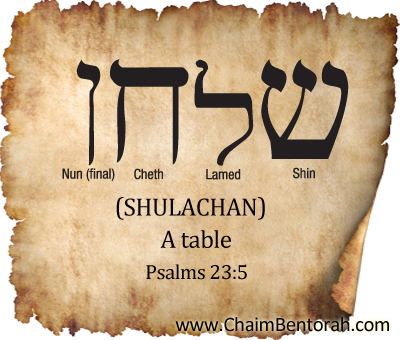
Psalms 23:5: “Thou preparest a table before me in the presence of mine enemies: thou anointest my head with oil; my cup runneth over.”
 It seems the commentators tend to walk in lockstep with each other in their explanation of the first part of this verse. What does David mean that God prepares a table before him in the presence of his enemies? Most Christian commentators seem to agree that God is providing a great feast for David as his enemies look upon him wondering how he could enjoy such a feast when they are about to lop off his head. In other words, it is David’s way of saying that he has no fear of his enemies.
This is in keeping with his walking through the valley of the shadows and fearing no evil. It also keeps with the shepherding motif. The shepherd leads his sheep to lush fields to graze and watches over them protects them from any predators while the sheep eat to their hearts content totally oblivious to any dangers. So too, David is able to enjoy a great feast without fear of attack by his enemies.
My studies in Archaeology cry out: “Hold it, wait one doggone minute!” Why are we so quick to assume that the table represents a banquet or feast or even having a meal? This only says that God prepares a table. Just a table, no feast, no banquet, simply a table. The word table in Hebrew is shulachan which comes from the root word shalach which is a word used for moving toward a goal or resolution. So, what does that have to do with a table? Another word in Hebrew for table is tavala which is a board or plank of wood. That is what comes to my mind when I hear the word table. Shulachan is a different, special table. A table of reaching a goal or resolution to a problem.
Hi there! Thank you for reading this Daily Word Study. Can I ask a favor? Share this Daily Word Study with your friends on Facebook and Twitter by clicking one of the icons below.
Thanks & Blessings, it means a lot to me!
STAY IN THE LOOP
Subscribe to our free newsletter.
Leave A Comment
Hebrew Word Study – A Passion – B’ir – Beth Ayin Yod Resh Song of Solomon 3:3, “The watchmen that go about the city found me: Saw ye him who my soul loveth?” “Ich bin ein Berliner” John F. Kennedy, June 26. 1963. Translation, “I am a jelly filled donut.” There is an urban legend
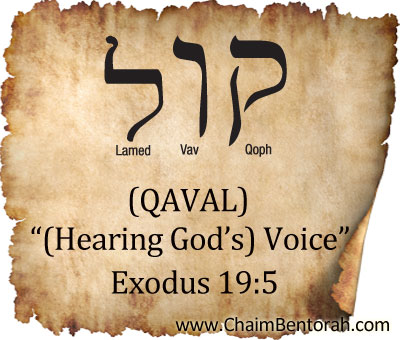
HEBREW WORD STUDY – (HEARING GOD’S) VOICE – QAVAL קול Exodus 19:5: Now therefore if you will obey my voice indeed and keep my commandments, Then you will be a peculiar treasure unto me above all the people, for all the earth is mine.” What caught my attention in this verse is the thought that
-
Hebrew Word Study – A Sensitive Nature – Pathah – Pei Taw Hei פתה Psalms 116:6: “The Lord preserves the simple, I was brought low and He helped me.” Hebrew Word Study – A Sensitive Nature – Pathah – Pei Taw Hei Psalms 116:6: “The Lord preserves the simple, I was brought low and He
WORD STUDY – ABBA אבא Mark 14:35-36: “And he went forward a little, and fell on the ground, and prayed that, if it were possible, the hour might pass from him. And he said, Abba, Father, all things are possible unto thee; take away this cup from me: nevertheless not what I will, but what