
by admin
Share
by admin
Share
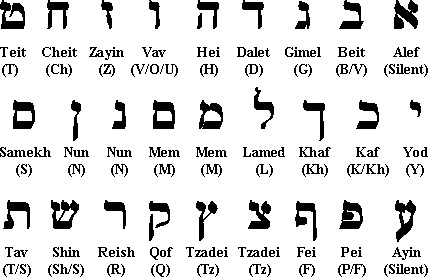
Hebrew Word Study – In The Thicket – Basevake – בַּסְּבַ֖ךְ Beth Samek Beth Kap
Genesis 22:13: “And Abraham lifted up his eyes and looked and beheld behind him a ram caught in a thicket by his horns.”
I never really considered the significance of the ram being caught in the thicket. My initial thought was, well God had to have the ram held in place by something. But as I thought about this, I recalled reading about an archeological discovery made back in the thirties in Southern Iraq in the area that was known as Ur. This was Abraham’s home town.
British Archeologist Charles Leonard Whoolley was excavating the Death Pit of Ur. This was thought to be a graveyard site for kings and nobility from the land of Ur but some felt it was the pit where those who were sacrificed to their god were thrown. Human sacrifices were made to win the favor of their god. He found an object guarding this pit that he called the Ram in the Thicket because it resembled the story in Genesis 22. The image is not so much that of a ram, goat or young bull that appears to be caught in a thicket, but is actually more a picture of a horned animal standing on its hind legs eating something at the top of a bush. This is dated to about 2050 BC. The picture of a horned animal reaching for a high branch would bear out this date as this is when there was a 300 year drought in the land of Ur and goats or similar horned animals would have been reaching high on bushes to eat because such feeding in the wild was scarce due to the drought. Abraham lived or was born about 1815 BC so he would have been born during this drought and more significantly when this symbol of a horned animal was a known symbol. No one really knows what the symbol represents. It is speculated, however, that this somehow represented the gods of that era taking a soul up to heaven. Another idea, which I think is more logical, is that the horned animal reaching up a thicket trying to get the last morsel of food was a picture of the struggle to survive during this 300 year drought and indicated that this was the pit where human sacrifices were thrown.
Would you like Chaim Bentorah as your personal Hebrew teacher?
|
|
The word thicket in the Hebrew is savek which means to entwine, or an entwining vine, tree or brush. It is not really a bushy type plant as we would imagine. In fact a fairly good picture of a savek can be found on the internet if you google up Ram in a Thicket. The word ram is derived from a sort of an all-purpose root word aval which is a word for any animal with horns. It could be a goat, deer, ram or horned bull.
Considering the words for ram and thicket and looking at the picture of the Mesopotamian god guarding the Death Pit I would not be surprised that when Abraham was about to sacrifice his son, God told him to look behind him where he saw an image similar to one he may have seen as a child growing up in the land of Ur to which many children were similarly sacrificed. He saw the image of Marduk or as it is known in the Sumerian language Amar-utu which means the calf of Utu (the sun god) or the young bull of the sun. Amar-utu would fit the Hebrew word aval which translators render as a ram but could also be rendered as a young horned bull.
So when Abraham took the ram or young bull and sacrificed it instead of his son he was putting to death, so to speak, the pagan god Amar-utu, the god of his youth and declaring his complete loyalty to the God Jehovah that revealed Himself to him. God was declaring that He was a God that demanded no human sacrifice of a child to obtain life and life eternal but instead He would offer His own son as a sacrifice to bring life and life eternal to him and to us. Just as Utu demanded the sacrifice of one’s son or daughter in order to grant life, God also demanded the sacrifice of a son, only it would be His Son to grant not only life but eternal life.
Our All Access Learning Channel offers teachings on many such Archaeological discoveries that bring deeper understanding to many Biblical texts
Join us at www.hebrewwordstudy.com
Hi there! Thank you for reading this Daily Word Study. Can I ask a favor? Share this Daily Word Study with your friends on Facebook and Twitter by clicking one of the icons below.
Thanks & Blessings, it means a lot to me!
STAY IN THE LOOP
Subscribe to our free newsletter.
Leave A Comment
-
Hebrew Word Study – A Passion – B’ir – Beth Ayin Yod Resh Song of Solomon 3:3, “The watchmen that go about the city found me: Saw ye him who my soul loveth?” “Ich bin ein Berliner” John F. Kennedy, June 26. 1963. Translation, “I am a jelly filled donut.” There is an urban legend
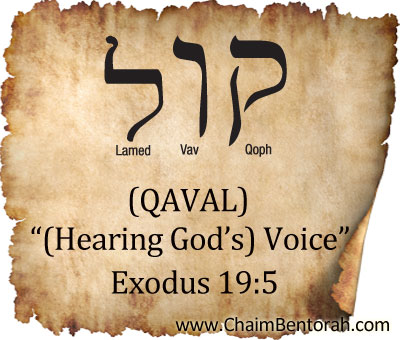
HEBREW WORD STUDY – (HEARING GOD’S) VOICE – QAVAL קול Exodus 19:5: Now therefore if you will obey my voice indeed and keep my commandments, Then you will be a peculiar treasure unto me above all the people, for all the earth is mine.” What caught my attention in this verse is the thought that
-
Hebrew Word Study – A Sensitive Nature – Pathah – Pei Taw Hei פתה Psalms 116:6: “The Lord preserves the simple, I was brought low and He helped me.” Hebrew Word Study – A Sensitive Nature – Pathah – Pei Taw Hei Psalms 116:6: “The Lord preserves the simple, I was brought low and He
WORD STUDY – ABBA אבא Mark 14:35-36: “And he went forward a little, and fell on the ground, and prayed that, if it were possible, the hour might pass from him. And he said, Abba, Father, all things are possible unto thee; take away this cup from me: nevertheless not what I will, but what