
by admin
Share
by admin
Share
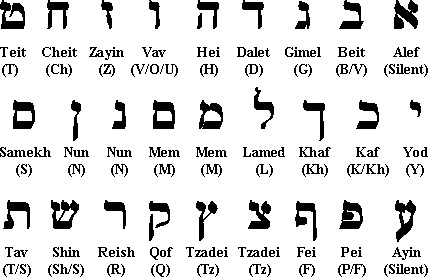
Hebrew Word Study – Wild Beast of the Desert – Tsiyim צִיִּ֔ים Sade Yod Yod Mem
Isaiah 13:21-22: “But wild beasts of the desert shall lie there; and their houses shall be full of doleful creatures; and owls shall dwell there, and satyrs shall dance there. The hyenas shall cry in its towers, and jackals in their pleasant palaces: her time is near, and her days shall not be prolonged”
I drive a bus for senior citizens and the disabled taking them to their medical appointments. I recently drove one elderly lady who hails from the Deep South with a dirt water accent and all. From the time she got on my bus to the time she got off she is delighted us with all her backwoods stories. She told this one story: “My daddy was preacher, a Baptist preacher, he’d baptize anyone, didn’t care if you were Catholic or Presbyterian, he’d baptize ya. He even tried to baptize the dog. The ole dog, he didn’t like it much, he fought ‘em. The deacon, he said: ‘Why you tryin’ to baptize that poor ole dog, he didn’t do nutin’ wrong.’ But my daddy he said: ‘Ya don’t know that, ya just gotta be sure.’ Yep, that’s what my daddy always said: ‘Ya gotta be sure.’”
Well, we all know animals are not in need of redemption or repentance as they do not have a free will and they cannot sin. Yet, I have heard many Christians attribute demonic activity on some poor creatures for no other reason than the fact that they are ugly or sinister looking like owls, ravens, goats etc. I mean if the demons are going to possess an animal why choose the ugly ones, why not the beautiful ones. After all, the chief demon himself is called an angel of light and was the most beautiful creature in the garden. If you are going to deceive someone why make it so obvious and dress him up as a toad?
Others will draw on passages of Scripture such as Isaiah 13:21-22 and say: “Lookie here, the owl is placed right up there with a satyr, a demonic creature, he too must be demonic by association.” Poor old owl, he did nothing wrong but scare the livin pudding out of you one night by giving an innocent hoot, it ain’t his fault. Yet, we categorize animals into Godly creatures and satanic creatures when paradoxically all animals are created by God Himself.
Isaiah 13:21-22 is a very curious passage and one that shows that even our best language experts, linguists and students of ancient languages still have much more to learn about our ancient Semitic languages.
Would you like Chaim Bentorah as your personal Hebrew teacher?
|
|
One hundred and eighty years before the fall of Babylon we have Isaiah prophesying not only of its destruction but how desolate the city will be after the destruction. It will be so desolate that wild animals will dwell in the city rather than human beings. Isaiah lists six types of animals that will live and possess the ruined city. You have tsiyim (wild beast of the deserts), ‘ochim (doleful creatures), benoth ya’enah (owls), se’irim (satyrs), iyim (hyenas) and tanim (jackels).
Here is the rub, no one can say for certain what these animals really are. Tsiyim (wild beast of the deserts) have been rendered as everything from lions to porcupines. ‘Ochim (doleful creatures) have been rendered as hyenas, jackals and owls. The simple fact is, translators can only guess as to the identity of these animals. No one knows for sure what animals Isaiah is referring to. Now you couple that with the fact that the ancients did not break down the animal kingdom into specifics like we do. Therefore a hyena, jackal and fox were all the same animals to the ancients. A wolf, dog and even a hyena were still all considered dogs. Actually, each of these names only describes the animal, it doesn’t really name the specific breed of the animal. The animals listed are desert creatures, howling creatures, doleful creatures, creatures of the night and desert howlers. These descriptions fit any number of animals and for us to really specify whether the animal is say: a fox, jackal or hyena, would be impossible as not even the ancients knew for sure. If I am going to say one animal is demonic rather than another then Sparky, my neighbor’s pit bull, would be just as demonically possessed as a jackal (maybe he is).
There is one curious animal that is mentioned, that is the satyr. It is this rendering that has led many of our ultra conservative Bible teachers to assume these animals are all demonic as the satyr is associated with a demonic creature. Actually, a satyr was a minor deity from Greek mythology, not Babylonian mythology. The satyr was a male companion to Pan (god of wild sheep and goats) and Dionysus (god of wine and winemaking). A satyr was half goat and half man and all were associated with eroticism and fertility. They are pictured as always dancing, symbolizing hedonistic behavior in the style of the Great Gatsby.
The word in Hebrew which is rendered as satyr is se’irim which simply means to be hairy. Mountain and wild goats were hairy and before long se’irim became associated with goats. If you were looking for a Hebrew word to put on a satyr se’irim would be a logical choice. Keep in mind that the satyr is a god of Greek mythology and we are dealing with Babylon here and a prophet who lived hundreds of years before Greek mythology.
I would avoid using the rending of se’irim as satyr only because it could prove very misleading to teachers looking for a platform and drawing a conclusion that all the animals associated with a se’irm are demonic. Come on, let’s give the poor creatures a break. I am not saying that demons cannot possess animals, I am only saying, let’s not persecute these poor creatures for something their daddies did long ago. A goat can’t help it if he were born a goat.
So why mention all these creatures and associate them with the destruction of Babylon? One clue might be found in the diary of Benjamin Tudelensis, a sixteenth century explorer who came upon the ruins of Babylon. In his diary he said he would not approach the city because of all the dangerous creatures such as jackals, wolves, and poisonous snakes that dwelled there. Each one of these creatures mentioned in Isaiah 13:21-21 can be rendered as a creature which possesses a threat to mankind. Perhaps the prophet was saying that even the most powerful armies could not protect the city from intrusion but God can send his own creation of innocent animals that will turn many away. Perhaps the prophet is saying that God can take the dwellings of the mighty and turn them over to his own creation if He so wishes. There are any number of lessons we can draw from this, so maybe we should give the owl a break. Just because he happens to be nocturnal and scare the bejeebers out of you by making a spooky sound does not mean we need to throw rocks at him. He is just as much a creation of God as Sparky, my neighbor’s pit bull (although sometimes I do wonder about Sparky).
Hi there! Thank you for reading this Daily Word Study. Can I ask a favor? Share this Daily Word Study with your friends on Facebook and Twitter by clicking one of the icons below.
Thanks & Blessings, it means a lot to me!
STAY IN THE LOOP
Subscribe to our free newsletter.
Leave A Comment
-
Hebrew Word Study – A Passion – B’ir – Beth Ayin Yod Resh Song of Solomon 3:3, “The watchmen that go about the city found me: Saw ye him who my soul loveth?” “Ich bin ein Berliner” John F. Kennedy, June 26. 1963. Translation, “I am a jelly filled donut.” There is an urban legend
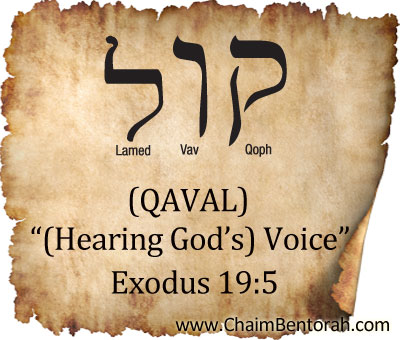
HEBREW WORD STUDY – (HEARING GOD’S) VOICE – QAVAL קול Exodus 19:5: Now therefore if you will obey my voice indeed and keep my commandments, Then you will be a peculiar treasure unto me above all the people, for all the earth is mine.” What caught my attention in this verse is the thought that
-
Hebrew Word Study – A Sensitive Nature – Pathah – Pei Taw Hei פתה Psalms 116:6: “The Lord preserves the simple, I was brought low and He helped me.” Hebrew Word Study – A Sensitive Nature – Pathah – Pei Taw Hei Psalms 116:6: “The Lord preserves the simple, I was brought low and He
WORD STUDY – ABBA אבא Mark 14:35-36: “And he went forward a little, and fell on the ground, and prayed that, if it were possible, the hour might pass from him. And he said, Abba, Father, all things are possible unto thee; take away this cup from me: nevertheless not what I will, but what