
by admin
Share
by admin
Share
Good Morning Yamom Ki Yesepar and Navim Hayomim:
Psalms 18:6: “In my distress I called upon the Lord and cried unto my God. He heard my voice out of his temple and my cry came before Him in His ears.”
David declares that he was in distress. This distress is “basar” which carries the idea of being bound up or in bondage. Did you ever have a problem or situation that had you so distressed that you couldn’t think of anything else. It was like you were in bondage to this distress. You couldn’t enjoy life, all you could do was think about this problem. That is the type of distress David is talking about here. He calls out to Jehovah. The word “call” is “kara’” which is a loud audible cry like a baby crying to God. This is not a polite prayer, but a cry of dependence upon God. Note that he is making this call to Jehovah and then he cries to “his God.”
The word “cry” is “shu’” which is in a Piel form. God is Elohim which is the God that you depend upon for all that you have. David makes it clear that this God that he is calling to is Jehovah. His cry or shu which, as a piel, would make this a wailing or pleading. This is also a specific cry. It is a cry for physical help, like health or financial.
God will hear him. The word “hear’ is “shama’” which is an intense listening with intent to respond. He hears from his “temple” or his “hikal” which is his splendor. This is a picture of a wealthy king hearing the crying of a peasant, and personally drawing upon his wealth to respond.
The cry came before Him in His ear (azan). This is a hearing with attention. Again the picture is not one of just a king hearing the cry of desperation,, but one of a king sitting in his palace listening and waiting for the cry to come or a mother laying awake in bed waiting for her baby to cry and then once it comes she springs into action.
That is all nice, but the point here is that it is not clear what action He takes. David is confirming that God does hear and does take action, but often we don’t see His action because His response is just not what we were expecting. You see the picture here is that God does not hear the cry of our voice but the cry of our heart. The appeal being made here is to the heart of God. God hears and responds but if we are not in tune with our heart or the heart of God we may miss His response. He may respond in something very simple as the song of bird, or comforting word, or even a simple Scripture verse.
The upshot is that when we cry and call unto God, we need to be ready and anticipate His response, whatever it might be.
STAY IN THE LOOP
Subscribe to our free newsletter.
Leave A Comment
Hebrew Word Study – A Passion – B’ir – Beth Ayin Yod Resh Song of Solomon 3:3, “The watchmen that go about the city found me: Saw ye him who my soul loveth?” “Ich bin ein Berliner” John F. Kennedy, June 26. 1963. Translation, “I am a jelly filled donut.” There is an urban legend
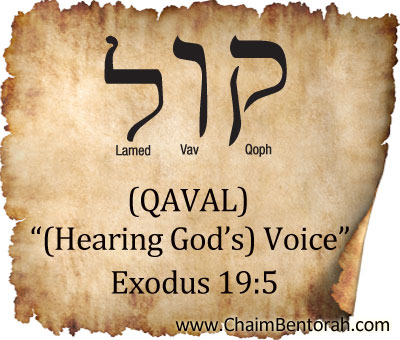
HEBREW WORD STUDY – (HEARING GOD’S) VOICE – QAVAL קול Exodus 19:5: Now therefore if you will obey my voice indeed and keep my commandments, Then you will be a peculiar treasure unto me above all the people, for all the earth is mine.” What caught my attention in this verse is the thought that
-
Hebrew Word Study – A Sensitive Nature – Pathah – Pei Taw Hei פתה Psalms 116:6: “The Lord preserves the simple, I was brought low and He helped me.” Hebrew Word Study – A Sensitive Nature – Pathah – Pei Taw Hei Psalms 116:6: “The Lord preserves the simple, I was brought low and He
WORD STUDY – ABBA אבא Mark 14:35-36: “And he went forward a little, and fell on the ground, and prayed that, if it were possible, the hour might pass from him. And he said, Abba, Father, all things are possible unto thee; take away this cup from me: nevertheless not what I will, but what