Isaiah 30:18: “Therefore will the Lord wait, that He may be gracious unto you, and therefore will he be exalted to have mercy on you. For Jehovah is a God of justice. Blessed are all who wait for Him.” This looks pretty clear cut. The Lord will wait so that He may be gracious
Proverbs 25:20-21, “Like one who takes off a garment on a cold day, or like vinegar on soda, Is he who sings songs to a troubled heart. 21, If your enemy is hungry, give him food to eat; And if he is thirsty, give him water to drink;…” This morning I looked out of
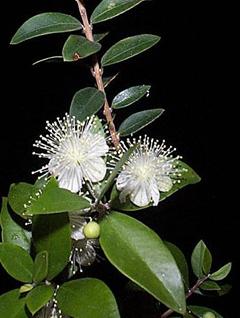
Isaiah 55:13: “Instead of the thorn shall come up the fir tree, and instead of the brier shall come up the myrtle tree: and it shall be to the LORD for a name, for an everlasting sign [that] shall not be cut off.” Throughout history and through the many world cultures myrtle has been

Isaiah 30:10: “Which say to the seers, see not and to the prophets, prophesy not unto us right things, speak unto us smooth things and prophesy deceit.” The way this is translated only contributes to the arrogance of modern Christians. You read this and you think: “How amazing that people would tell the prophets

Deuteronomy 32:20: “How should one chase a thousand, and two put ten thousand to flight, except their Rock had sold them, and the Lord had shut them up?” My brother and I were talking about linguistics and he mentioned a new model in linguistics that was emerging. It is called relevance in translation. I am still trying to figure

Isaiah 28:23: “Give ye ear, hear my voice, hearken and hear my speech.” If you really want to light my boiler fire, just ask: “Well, what is God saying to you about this.” My guaranteed first strike would be: “If I knew what God was saying to me I wouldn’t be sitting here

Isaiah 26:3: “Thou wilt keep him in perfect peace, whose mind is stayed on thee: because he trust in you.” If you are in the habit of claiming a verse for the New Year, might I suggest a great verse for 2014, it is Isaiah 26:3. Most of us on New Year’s Eve not

Isaiah 46:10 Declaring the end (aharit אחרית) from the beginning, And from ancient times (qadam קדם )things which have not been done, Saying, ‘My purpose will be established, And I will accomplish all My good pleasure’. End “Aharit”: To go after, past, behind, and future are all usages for “aharit”. How can a word mean both past and
Isaiah 9:6: “For unto us a child is born, unto us a son is given and the government will be upon His shoulders.” With the advent of worship teams, church choirs are starting to become an endangered species, if they are not already extinct. That is good and bad in certain ways. For me
Isaiah 6:5: “Then said I, “Woe is me for I am undone, because I am a man of unclean lips.” I am quite baffled over the first word in the verse which is ’omar and not ‘omer. The word means to speak or say. However, the word ‘omar is spelled with a patah under