
by admin
Share
by admin
Share

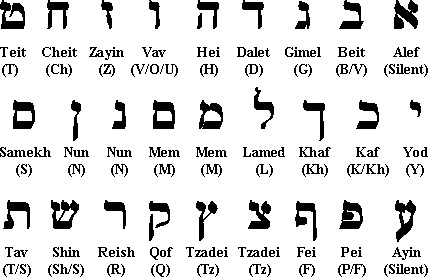
ARAMAIC WORD STUDY – ASKING IN THE FLESH – DABISH’IT SHA’IT דבישאית שאלין Daleth Beth Yod shin Aleph Yod Taw Shin Aleph Lamed Yod Nun
Matthew 18:19-20: Again I say unto you that if two of you shall agree on earth as touching anything that they shall ask it shall be done for them of my Father which is in heaven. For where two or three are gathered together in my name, there I am in their midst.”
“Where two or three are gathered together to study Torah, the Divine Presence is in their midst.” The Talmud
The most common interpretation of Matthew 18:19-20 is such a sacred cow for Western Christians that if anyone dare suggest that our interpretation is even slightly contrary to the standard interpretation that would be like suggesting that apple pie and mothers were un-American. Yet, everytime I attend a prayer meeting and I hear someone say, “Let’s agree in prayer,” I can’t help but stop and think about what they are really saying. I mean is God going to be more motivated to answer a prayer if three people are praying than if one. What if I am alone and have no one to pray in agreement with me over an urgent matter? Am I out of luck? Is God up there in heaven shaking head saying; “Chaim, Chaim, when are you going to learn you need at least two or three others agreeing with you in prayer before you can expect an answer.” Doesn’t that contradict what it tells us in James 5 that the prayer of a (that is one) righteous man can avail much?
In the Greek, Matthew 18:19 literally reads: “Again, amen, I am saying to you that if ever two shall be in agreement out of you on the land in every matter that they are requesting it shall be becoming to them.” Here is the key, the idea is not to be ganging up on the Lord and storming the palace hoping he will give in and give you want you want. It is the idea that someone is agreeing with you that your request is within the will of God. If that person does not agree, then a third person is called in to arbitrate the dispute and bring everyone into agreement. In James 4:3 we learn that: “Ye ask, and receive not, because ye ask amiss, that ye may consume [it] upon your lusts.” The word amiss in Aramaic is dabishiait which has the idea of asking in the flesh. In other words you are praying for fleshly desires and not heavenly desires.
Would you like Chaim Bentorah as your personal Hebrew teacher?
|
|
The Aramaic word Jesus used for agree is nashatuon which in this particular grammatical form means to be found worthy. When people come together to pray many have various motives. Some like to show off their piousness, some like to preach a little sermon when they pray or to show off their great oratory ability, some just pray out of group pressure. But if only two or three are praying the fervent prayer of a righteous person, and they are worthy, that is they are not asking to fulfill their own fleshly desires or lust but only to fulfill the will of God, the request will be granted. Where two or three are found worthy ie., they are not asking for their own vanity but for the sake of the kingdom of God.
Jesus almost quotes verse 20 from Oral Tradition which later became the Talmud. The Talmud teaches : “Where two or three are gathered together to study Torah, the Divine Presence is in their midst.” Ancient Jews, and even today, would never study Scripture alone. The Talmud admonishes one never to study the Torah alone. Some people would actually hire someone and pay them to study the Torah with them, just so they would not have to study it alone. Of course, you are going to say that the passage in Matthew is clearly speaking about our prayer request and not studying the Bible. We would say that because our mindset in our Western Culture is “me” oriented. To many people God is merely a celestial vending machine. Pop in a few token prayers, push the button and out comes what you want. For many in our Western society, Christianity is a marriage of convenience with God. The purpose of such a marriage is to insured that one’s personal needs come first. In Jewish thinking, however, it is a marriage of love where the needs of the other come first. So, we approach Matthew 18 not as “Ah ha, a formula to get my prayers answered” but rather as another deep teaching by Jesus. The reason the Talmud says “Where two or three are gathered together…” and most likely why Jesus used this common expression is that when two people study together, a problem sometimes arises. The two may disagree over how to interpret a passage. When this happens, a third person, often a rabbi, is brought in to bring the two into an agreement. It also happens when we make a request to God. We should have a prayer partner who will confirm our request. If there is a disagreement that the request is not of God but of the flesh, you may need to bring in a third party to help bring all into agreement that they are praying the will of God and not asking out of fleshly motives.
Simply put this passage is speaking more of the unity of the body rather than offering a formula to get your prayers answered.
Hi there! Thank you for reading this Daily Word Study. Can I ask a favor? Share this Daily Word Study with your friends on Facebook and Twitter by clicking one of the icons below.
Thanks & Blessings, it means a lot to me!
STAY IN THE LOOP
Subscribe to our free newsletter.
Leave A Comment
Hebrew Word Study – A Passion – B’ir – Beth Ayin Yod Resh Song of Solomon 3:3, “The watchmen that go about the city found me: Saw ye him who my soul loveth?” “Ich bin ein Berliner” John F. Kennedy, June 26. 1963. Translation, “I am a jelly filled donut.” There is an urban legend

HEBREW WORD STUDY – (HEARING GOD’S) VOICE – QAVAL קול Exodus 19:5: Now therefore if you will obey my voice indeed and keep my commandments, Then you will be a peculiar treasure unto me above all the people, for all the earth is mine.” What caught my attention in this verse is the thought that
-
Hebrew Word Study – A Sensitive Nature – Pathah – Pei Taw Hei פתה Psalms 116:6: “The Lord preserves the simple, I was brought low and He helped me.” Hebrew Word Study – A Sensitive Nature – Pathah – Pei Taw Hei Psalms 116:6: “The Lord preserves the simple, I was brought low and He
WORD STUDY – ABBA אבא Mark 14:35-36: “And he went forward a little, and fell on the ground, and prayed that, if it were possible, the hour might pass from him. And he said, Abba, Father, all things are possible unto thee; take away this cup from me: nevertheless not what I will, but what