
by admin
Share
by admin
Share
Aramaic Word Study – Blinded – Da’awaro עַוַר Daleth Ayin Vav Ayin
John 12:40: “He hath blinded their eyes and hardened their hearts, that they should not see with their eyes nor understand with their heart and be converted, and I shall heal them.”
This passage has always been a great mystery to me. I have examined this word tetyphloken (He has blinded) in the Greek over and over and there is no getting away from it. Tetyphloken is in a third person singular active tense and must be translated as “He made them blind). This leads us to believe that God has deliberately blinded the people and hardened their hearts so they could not be converted.
Commentaries, knowing there was no way around this Greek form, have tried to explain this as saying that God knew the people would not repent because of their hardened hearts, but he commanded the message be given anyway and the end result would be the same as if he commanded their eyes be blinded and hearts hardened. A good explanation but it doesn’t satisfy me. There has to be another explanation.
I think I found another explanation when I read this in my Aramaic Bible. The Aramaic word used for “he has blinded” is da’awado which is a third-person plural passive voice, not a third-person singular active voice in a Pael or intensive form. I have rechecked and rechecked and clearly Da’awar, the singular active is not used but da’awado the plural passive is used. Hence the Aramaic would read: “They have become totally blind,” not “he made them blind.”
Of course, is this not to say that our Greek text is wrong and the Aramaic text is right? How do we know if the Aramaic text is wrong and the Greek text is right? Are we to say that for centuries Christians have been studying the wrong text? They have devoted themselves to the study of Greek almost to the exclusion of the Aramaic when all along we should have been reading the New Testament in Aramaic.
Would you like Chaim Bentorah as your personal Hebrew teacher?
|
|
In the study of textual criticism, these questions have haunted me for 40 years. Can we really trust our English text, how do we know it is an accurate translation of the Word of God? Why do pastors and Christian leaders spend years studying Greek when possibly the original manuscripts were written in Aramaic without the original manuscripts either Greek or Aramaic, how can we be sure what we have is truly the written Word of God and not some scribbled error or simply a scribe inserting his own ideas, pushing his own doctrinal and theological agenda when he copied the manuscripts to begin with. Our earliest complete manuscripts, the Sinaiticus and Vaticanus date to the 4th century with the earliest fragment the Papyrus 45 dating to 250 AD. That is 250 years after Christ. The earliest complete manuscripts in Greek and Aramaic only date to 500 years after Christ. All scholars both evangelical and liberal agree none of the original manuscripts have been found. Hence, how can we be sure the copies of the copies of the copies are really accurate?
There was a period of my life when I could not intellectually accept the Bible as the true Word of God. I sided with the scholars who said the Greek text was filled with inaccuracies, grammatical inconsistencies, and all sorts of problems. I could not deny the difference in writing styles in books of the Old Testament suggesting passages and phrases adjacent to each other could have been written by different authors separated by hundreds of years and what was given as prophecy was merely a historical record.
Then one day in total frustration I held my Bible up to God and said: “As far as I am concerned this book is filled with inaccuracies and errors, we have no idea what the original manuscripts said or how much man has fooled around with this book. There are hundreds of other works not included in this book and only by popular vote of a group of men who had personal professional agendas they decided what books to include in the final canon. I have every reason to believe this book is only the works of man, but I believe that you, God Jehovah, exist, and you love me and if you love me you want to talk with me and I will accept by faith that despite all the human equations involved, you managed to get into my hands your inspired Word to me and I will believe this book is your inspired inerrant Word by simple faith.”
Once I declared this, that Book suddenly became alive, I began to study it with an interest I never had and found bells and whistles going off with every verse. I cannot prove that the Bible is truly God’s Word, I just know it is, I believe it is by simple faith and I have grown to love it as life itself. No one knows what was in the original manuscripts. No one knows if Mark 16:9-20 was really in the original manuscripts or not. If it is in my Bible, I will believe it. No one knows if the New Testament was originally written in Greek or Aramaic, but I will study the New Testament in both languages and let the Holy Spirit tell me which rendering to accept. You may disagree with my rendering, but that is not my concern, that is a matter between myself and the God I love. You find your own rendering. If you don’t like it, you don’t have to read my blog or books and I hope you have a long hot summer.
I for one will accept the Aramaic version of John 12:40 and render this as “Their eyes have become blind,” and not the Greek rendering “He has made their eyes blind.” If you want to wave your Koine Greek flag over this verse go right ahead.
Hi there! Thank you for reading this Daily Word Study. Can I ask a favor? Share this Daily Word Study with your friends on Facebook and Twitter by clicking one of the icons below.
Thanks & Blessings, it means a lot to me!
STAY IN THE LOOP
Subscribe to our free newsletter.
Leave A Comment
-
Hebrew Word Study – A Passion – B’ir – Beth Ayin Yod Resh Song of Solomon 3:3, “The watchmen that go about the city found me: Saw ye him who my soul loveth?” “Ich bin ein Berliner” John F. Kennedy, June 26. 1963. Translation, “I am a jelly filled donut.” There is an urban legend
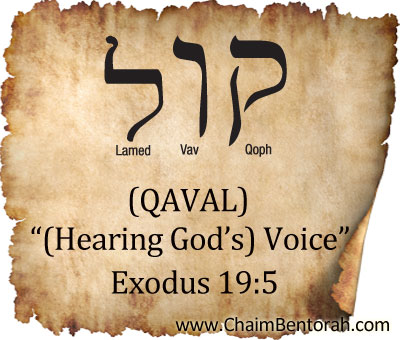
HEBREW WORD STUDY – (HEARING GOD’S) VOICE – QAVAL קול Exodus 19:5: Now therefore if you will obey my voice indeed and keep my commandments, Then you will be a peculiar treasure unto me above all the people, for all the earth is mine.” What caught my attention in this verse is the thought that
-
Hebrew Word Study – A Sensitive Nature – Pathah – Pei Taw Hei פתה Psalms 116:6: “The Lord preserves the simple, I was brought low and He helped me.” Hebrew Word Study – A Sensitive Nature – Pathah – Pei Taw Hei Psalms 116:6: “The Lord preserves the simple, I was brought low and He
WORD STUDY – ABBA אבא Mark 14:35-36: “And he went forward a little, and fell on the ground, and prayed that, if it were possible, the hour might pass from him. And he said, Abba, Father, all things are possible unto thee; take away this cup from me: nevertheless not what I will, but what