
by admin
Share
by admin
Share
Good Morning Yamon Ki Yesepar and Nevim Arith Hayomim:
Psalms 27:6: “And now shall my head be lifted up above my enemies round about me. Therefore will I offer in his tabernacle sacrifices of joy.”
David is surrounded by his enemies and he says that his head will be lifted up above his enemies. He will offer in his tabernacle sacrifices of joy. He is giving one complete picture here, that of offering up prayer. The word “tabernacle” is “ahal” which means tent, but is also used to express a prayer shawl. Under this prayer covering which is meant to create a privacy between a person and God in prayer, David is able to lift his head above his enemies. In that secret place between him and God he can find freedom from the fear of his enemies.
In Matthew 5:40 Jesus commands: “If any one wants to sue you and take your tunic, let him have your cloak also.” In the Greek that word cloak is imation which has a Hebrew equivalent to “ahal.” This cloak was most likely a talit katan or a prayer shawl. Possibly what Jesus was saying is that if anyone wants to sue you and take you tunic, offer him your prayers as well.
Scripture seems to make if very clear that we are to pray for our enemies. This is not easy to do, David seemed to know that, because he is offering a sacrifice of joy.
The word “sacrifice” is “zavach” which means to destroy or slaughter. The word “joy” is “rua’” which is a joy but also expresses a shouting joy or a battle cry. This could haved a double meaning. First is the idea of a sacrifice of joy. We often sing the song “A sacrifice of praise.” Yet there is no sacrifice of praise in Scripture, It is never a sacrifice to praise God. There is a sacrifice of joy, to praise God in the midst of grief, fear, or sorrow. To praise God when there is no joy.
The other idea of a sacrifice of joy, particularly in the context of this verse where David is speaking of his enemy, is to look at that word “joy” as a battle cry. David is therefore saying that he will pray for his enemy rather than sound a battle cry and fight against his enemy. This could be a passage that came to the disciples mind when Jesus taught that were are to turn the other check in Matthew 5. David was a warrior, ready to defend. He lead an army and would defend his nation. Yet, he also says that he will rise above his enemy by praying for them. Just as the passage in Matthew does not mean we are not defend ourselves, but we are first to offer prayers for our enemies, to love our enemies.
When we confront those who are seeming enemies to us, our first plan of attack is to pray for them, to love them as God loves them.
STAY IN THE LOOP
Subscribe to our free newsletter.
Leave A Comment
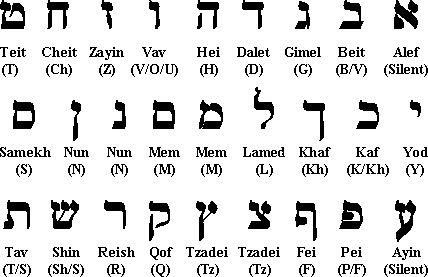
Hebrew Word Study – A Passion – B’ir – Beth Ayin Yod Resh Song of Solomon 3:3, “The watchmen that go about the city found me: Saw ye him who my soul loveth?” “Ich bin ein Berliner” John F. Kennedy, June 26. 1963. Translation, “I am a jelly filled donut.” There is an urban legend

HEBREW WORD STUDY – (HEARING GOD’S) VOICE – QAVAL קול Exodus 19:5: Now therefore if you will obey my voice indeed and keep my commandments, Then you will be a peculiar treasure unto me above all the people, for all the earth is mine.” What caught my attention in this verse is the thought that
-
Hebrew Word Study – A Sensitive Nature – Pathah – Pei Taw Hei פתה Psalms 116:6: “The Lord preserves the simple, I was brought low and He helped me.” Hebrew Word Study – A Sensitive Nature – Pathah – Pei Taw Hei Psalms 116:6: “The Lord preserves the simple, I was brought low and He
WORD STUDY – ABBA אבא Mark 14:35-36: “And he went forward a little, and fell on the ground, and prayed that, if it were possible, the hour might pass from him. And he said, Abba, Father, all things are possible unto thee; take away this cup from me: nevertheless not what I will, but what