
by admin
Share
by admin
Share
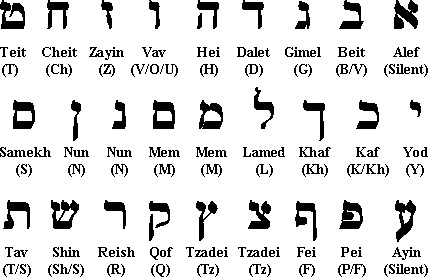
Hebrew Word Study – A Lamb that Goes Ba – Qol – קול – Qop Vav Lamed
Psalms 3:4: “I cried unto the LORD with my voice, and he heard me out of his holy hill. Selah.”
This cry came during one of the lowest most trying and sorrowful times of David’s life. His own beloved son, Absalom which means Father of peace (av-father, shalom-peace) not only rebelled against him, but staged a coup enlisting David’s best friend Ahithophel to betray him. Ahithophel walked with David in the Temple courts, served as his chief advisor and shared deep confidences with him. Two of the dearest people on earth to David literally stabbed him in the back.
Imagine the heart break, the torment and agony David must have felt as he fled with a few trusted friends from his throne with a price on his head. In this midst of this deep despair and heart ache he cried unto the Lord with his voice.
Now that sounds a little superfluous, what else would he cry unto the Lord but with his voice? But that word voice when you examine it in its Semitic origins and consider the fact that David’s early life was spent as a shepherd you pick up the agony of his soul. The word voice in the Hebrew qol which creates a deep, heart rendering emotional cry.
Would you like Chaim Bentorah as your personal Hebrew teacher?
|
|
First the word cry could be a literal cry. The word qara’ has the idea of calling out in tears, but it doesn’t necessarily have to mean that which is why David adds the word voice. Throughout the Psalms David uses the word qara’ to express the idea of prayer, calling out to God. Sometimes prayer is not verbal as with Hannah in I Samuel 1 where the High Priest thought she was drunk because she moving her lips but no sound was coming out. This may be one reason why the word kol – voice is used to show that David was crying out verbally and not silently.
But there may be another reason why he says he was calling out with his voice or qol. The Semitic origins of the word qol suggest that it is an onomatopoeia. I mean I deserve a PhD for just being able to use a word like that. Yet, it is simply a word that is formed by the imitation of the sound that it makes. For instance, words like boom or kaboom are an onomatopoeia. In Chicago our public transit system has elevated trains that run in a loop around the downtown area. Thus, the downtown area of Chicago has been known as the Loop. The story goes that man got on a bus and asked the bus driver: “Does this bus go to the loop?” The bus driver replied: “No, it goes beep, beep.” To the loop is a pun for an onomatopoeia tootaloop which is a slang word an old fashion sounding horn.,. Beep is also an onomatopoeia as it is the sound of the horn of a motor vehicle. qol is considered an onomatopoeia because if it is pronounced correctly it sounds almost like the bleating of a little lost lamb. In other words, David is saying that he cried unto the Lord like a frightened, little lost lamb. Even though David had been the king of a powerful nation he cried out to God (To take a line from Gershwin): “I’m just a little lamb who is lost in the woods.”
Sheep are creatures of little brain. If they get separated from their flock, they have no idea how to find their shepherd. All they can do is stand alone, vulnerable to predators, and bleat, which sounds like a little child crying.
God heard David’s cry. The word heard is ‘anna’ which means to respond, God not only responded but He responded out of His holy hill. Most commentators agree this is a reference to a place where the tabernacle with the Ark of the Covenant rested. Some say it is a direct reference to the mercy seat of the Ark of the Covenant. But, ultimately, it is a reference to the personal response or presence of God. God did not send an angel, an emissary or even a sign. He Himself came to David in the form of His own personal presence. The Tabernacle was the home of God on earth. Although God encompasses the entire universe (Psalms 139:7-10 ) He cannot call the earth His home because of the sin in the world. That is why the tabernacle and/or temple is a picture of the human body because He can only call a sinless place His home and by the blood of His Son our human bodies can be sinless.
When David said that God answered him from His holy hill he was saying that God’s answer came from His very presence. I remember as a child we used to sing an old hymn: “I must tell Jesus.” The author of this song was a pastor who one day visited a woman from his parish that was going through a very difficult and hurtful time. She wrung her hands and repeated over and over, “What shall I do, I don’t know what to do.” Pastor Hoffman gave a typical pious answer: “You cannot bear your sorrows alone, you must tell Jesus.” Sometimes the old clichés actually work. It did for this woman whose face suddenly lit up and she exclaimed: “Yes, I must tell Jesus, I must tell Jesus.” She called to Jesus in a kol, like a little lost lamb crying and He answered her from his holy hill or with his presence. From that Pastor Hoffman was inspired to write the words of the old Hymn:
I must tell Jesus, all of my trials
I cannot bear these burdens alone
In my distress, He kindly will help me
He ever loves and cares for His own.
Elisha Hoffman.
Sometimes all it takes is just feeling His presence and all your cares will flee away.
Hi there! Thank you for reading this Daily Word Study. Can I ask a favor? Share this Daily Word Study with your friends on Facebook and Twitter by clicking one of the icons below.
Thanks & Blessings, it means a lot to me!
STAY IN THE LOOP
Subscribe to our free newsletter.
Leave A Comment
-
Hebrew Word Study – A Passion – B’ir – Beth Ayin Yod Resh Song of Solomon 3:3, “The watchmen that go about the city found me: Saw ye him who my soul loveth?” “Ich bin ein Berliner” John F. Kennedy, June 26. 1963. Translation, “I am a jelly filled donut.” There is an urban legend
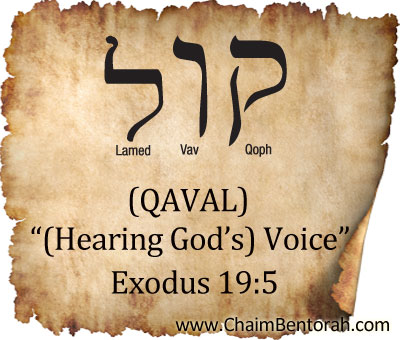
HEBREW WORD STUDY – (HEARING GOD’S) VOICE – QAVAL קול Exodus 19:5: Now therefore if you will obey my voice indeed and keep my commandments, Then you will be a peculiar treasure unto me above all the people, for all the earth is mine.” What caught my attention in this verse is the thought that
-
Hebrew Word Study – A Sensitive Nature – Pathah – Pei Taw Hei פתה Psalms 116:6: “The Lord preserves the simple, I was brought low and He helped me.” Hebrew Word Study – A Sensitive Nature – Pathah – Pei Taw Hei Psalms 116:6: “The Lord preserves the simple, I was brought low and He
WORD STUDY – ABBA אבא Mark 14:35-36: “And he went forward a little, and fell on the ground, and prayed that, if it were possible, the hour might pass from him. And he said, Abba, Father, all things are possible unto thee; take away this cup from me: nevertheless not what I will, but what