
by admin
Share
by admin
Share
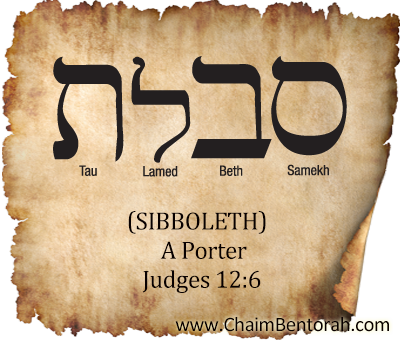
Hebrew Word Study – A Porter – Sibboleth – Samek Beth Lamed Taw
Judges 12:6 Then said they unto him, Say now Shibboleth: and he said Sibboleth: for he could not frame to pronounce [it] right. Then they took him, and slew him at the passages of Jordan: and there fell at that time of the Ephraimites forty and two thousand.
In Judges 11 we learn how the Amonites and the Israelites who settled in the land of Gilead, which consisted mostly of people from the tribes of Manasseh and Gad, got into a land dispute. Israel rightfully owned the land through conquest, and now the Amonites wanted the land back. I know it sounds a lot like today with the demand that Israel return to the borders prior to the Six-Day War. It was the same scenario, Israel just wanted to live peacefully, but the people of the land of Canaan just did not want them there, went to war, and much was shed blood. When the smoke cleared Israel had conquered additional territory vital to their defense. Then the prior owners of the land began to demand it back saying it was rightfully theirs. The Gileadites declared, much as Israel is declaring today, “Hey, this land is rightfully ours bought with the blood of our people. We desire we no fight with you but if you insist on taking what is ours, then put up or shut up.” Unlike Israel’s enemies today who have yet to put up although they haven’t shut up, the Amonites decided to put up. The Gileadites needed a leader and the best qualified was not their first choice. It was Jephthah, who was an outcast because his mother was a prostitute whose father could have been anyone. Because of his questionable parentage, he was forced into exile and not allowed to live among his own people. Yet, he gained a reputation as a fearless warrior and leader of men. So with tails tucked behind them, the Gileadites came crawling to Jephthah begging him to build an army and fight against the Amonites. Jephthah agreed, so long as they would pay him a little respect and make him their leader, not only during the fight but afterward as well. They agreed and Jephthah sent out the call to all the surrounding tribes to join him in battle against the Amonites. Everyone who received the call responded except for the tribe of Ephraim that lived across the Jordan.
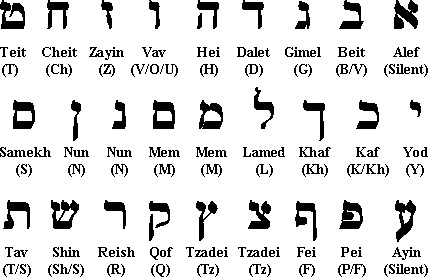
We do not know why Ephraim did not join in the battle with their brothers from Gilead, but I suspect they just thumbed their righteous nose at Jephthah using the “B” word which was quite correct, he was the son of a prostitute and they would not join themselves to such a loser. God would surely not use such a person to bring victory, he did not have the right heritage. But they apparently did not know the heart of God and what God would do for someone who humbled themselves before Him and was willing to give him full credit for any victory. When someone does that their past or heritage means nothing to God. So God gave Jephthah a great victory. When that happened Ephraim knew they had made a big mistake by not joining with their brothers in a righteous cause so they went to Jephthah and rather than apologize for their arrogance, they simply demanded to know why Jephthah did not ask them for help. Bad mistake. Jephthah knew he begged for their help, and Ephraim knew he begged for their help, but they were just too arrogant to admit they were wrong. Their pride just would not allow them to lower themselves to a man who was the son of a prostitute. Jephthah did not stand around and argue, he just lifted his sword and the Ephraimites took off running, high-tailing it across the Jordan River. The only problem was that when they reached the Jordan, there were Jephthah’s men guarding the bridge. When the Ephraimites asked to be allowed to cross the river Jephthah’s men simply said: “Sure, but first say the secret word.” They then asked what the secret word was and Jephthah’s men said, “Shibboleth.” Now Shibboleth could mean either an ear of corn or a stalk of grain, but it could also mean a stream or river. In this context, it would most likely mean river and what Jephthah’s men said was, “Go ahead say the words, ‘let us cross the river.’” The problem was that even though you may speak the same language, you can have a different dialect. I grew up in Chicago and when I went to school in various parts of the country, people would often comment on my Chicago accent. For instance, if I do not stop to think about it, I will say Da Bears rather than The Bears. No matter how hard I try, I cannot say The Bears unless I pause and really think about what I am saying. But you know what, I am proud to be from Chicago, it is my home town and if I travel to one of the formal New England states, I am going to say Da Bears and be proud of my speech. I suspect it was pretty much the same way in this situation, for you see the people of Ephraim did not use the sh sound but just used the s sound so what they said was sibboleth. This would immediately identify them as Ephraimites and as a result, they would be killed by Jepthah’s men.
Would you like Chaim Bentorah as your personal Hebrew teacher?
|
|
What bothers me about this is that they killed 42,000 Ephraimites using this little test. Now it takes time to kill 42,000 and I doubt very much they crossed the river one at a time. They came in groups and you would think that somewhere along the line they would get wind of what was going on and that they had better start practicing their sh sound. I don’t think the Ephraimites were that stupid, I think they were that arrogant and they were not going to let the followers of a “B” tell them what they could or could not do. I think many of them deliberately said sibboleth as a challenge and died for it. You see the word shibboleth means a stream or river, but the word sibboleth when spelled with a samek means a porter. I believe the arrogance of the Ephraimites led them to sneer back at the Gileadites and call them just a porter, a butler, a red cap who should help them carry their bags across the river.
Is there a lesson in that for us today? Many commentators will say that this whole situation between the brother tribes was one of pride. I agree and would render this whole story in that context. Of course in our society today it is the politically correct thing to not question one’s past or heritage, in fact, we have come to respect single parents who manage to raise their children alone and children from a single household who manage to overcome the difficulties and make something of themselves. But arrogance still thrives and it thrives in our Christian communities.
You may have noticed that I have taken a lot of liberties with the story of Jephthah and shibboleth. I believe I am correct in my interpretation of this story but I have rendered this story from my heart, not from my PhD or my years of teaching and study in the Hebrew language. Yet, few people will challenge my interpretation because I apparently have some credentials. My education and teaching experience are my shibboleth. I hold up my diplomas and I am allowed to pass with my interpretations of Scripture, no matter how wacky it is. If a pastor or just an average Christian who is called by God, walks with God, and seeks the heart of God but has little or no education should tell this story the way I do, I might turn my nose up to him and say, “Come on, a simply understanding of the Hebrew language and the difference between a Samek and Shin would tell you…”
The problem with Western Christianity and evangelical churches is that our shibboleth is our education, our PhDs our reputations, our platforms, our experiences when our shibboleth should be our childlike faith in God and our hunger to know His heart..
Hi there! Thank you for reading this Daily Word Study. Can I ask a favor? Share this Daily Word Study with your friends on Facebook and Twitter by clicking one of the icons below.
Thanks & Blessings, it means a lot to me!
STAY IN THE LOOP
Subscribe to our free newsletter.
Leave A Comment
Hebrew Word Study – A Passion – B’ir – Beth Ayin Yod Resh Song of Solomon 3:3, “The watchmen that go about the city found me: Saw ye him who my soul loveth?” “Ich bin ein Berliner” John F. Kennedy, June 26. 1963. Translation, “I am a jelly filled donut.” There is an urban legend
HEBREW WORD STUDY – (HEARING GOD’S) VOICE – QAVAL קול Exodus 19:5: Now therefore if you will obey my voice indeed and keep my commandments, Then you will be a peculiar treasure unto me above all the people, for all the earth is mine.” What caught my attention in this verse is the thought that
-
Hebrew Word Study – A Sensitive Nature – Pathah – Pei Taw Hei פתה Psalms 116:6: “The Lord preserves the simple, I was brought low and He helped me.” Hebrew Word Study – A Sensitive Nature – Pathah – Pei Taw Hei Psalms 116:6: “The Lord preserves the simple, I was brought low and He
WORD STUDY – ABBA אבא Mark 14:35-36: “And he went forward a little, and fell on the ground, and prayed that, if it were possible, the hour might pass from him. And he said, Abba, Father, all things are possible unto thee; take away this cup from me: nevertheless not what I will, but what