
by admin
Share
by admin
Share

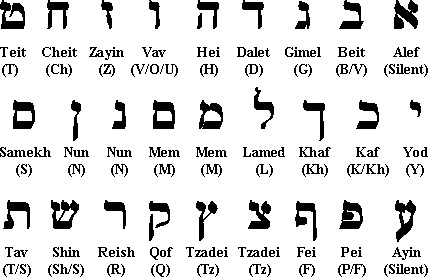
HEBREW WORD STUDY – EVEN WITH GLORY – ‘APH KEBODI אפ כבודי Aleph Pei Kap Beth Vav Daleth Yod
Psalms 108:1: “O God, my heart is fixed, I will sing and give praise even with my glory.”
What does that mean to praise, even with my glory. What is David talking about when he says “his glory.” Have you ever had one of those times when you carry a burden that is just so overwhelming that you can’t “even pray”? You try to pray, but it is just such an effort, you feel so “weighted” down. Note the word I used, “weighted down.” You seek a a diversion, watching a football game, going to a movie, a party or even indulging in addictions like alcohol or drugs just to get your mind off that kavod. You see that is the Hebrew word for glory. We think of glory as something awesome and wonderful but also means a weightiness or heaviness.
This is the way David felt when he started to write this Psalm. You read this Psalm and it appears like one of his lighter moments. He seems so joyful, so happy. Yet, this first verse gives his true emotions away.
He calls out to God saying that his heart is fixed. The word for fixed is kon which has the idea of being established or directed. Today we would say his heart was focused. His heart was not focus on God but on his burden. He knows, however, that all he has to do is just change his focus off his kavod and then sing and give praise.
The word for praise that is used here is zamar. It is a song of praise, but it is a very focused praised. The word also is used for cutting or pruning. This is a very direct praise, no fluff, no disjointed or meaningless words, but a very specific praise. The word is also in a piel form with a paragogic Hei. This makes this a very direct and focused praise. A praise coming from the very depths of his being, his soul. It is a very intense praise. David is putting every fiber of his whole being into this praise that cuts through or prunes aways all that kavod.
Then he says: “Even with my glory.” Let’s take a closer look at this word for glory which is kavod and means heaviness. It can also mean burdensome or grievous. For better understanding since we have such a positive view of the word glory perhaps we could substitute the word glory for burden or grievous. David will give praise even with his burden.
David is overwhelmed with some very heavy burden. His heart is so fixed on this issue that he can not praise or worship God. So, he says he will sing a song of praise. Not just any praise. He could praise God for His power, for His majesty, etc. David has done this many times, but right now that is not the praise that he can offer. So, the praise he offers is “even” with his burden. The word even is aph which is often translated as indeed or furthermore. “I will praise you indeed with my burden.” Aph is a demonstrative particle, an exclamation .
Would you like Chaim Bentorah as your personal Hebrew teacher?
|
|
David is not ignoring his burden, or pretending it does not exist. He is simply bringing God into the picture. He is entering into an intense praise with his burden right out there, out in front. He and God are going to share this burden. As you read the rest of the Psalm you find David talking about the awesome power of God, his control over everything and in that light, the weight of his burden get’s lighter and lighter.
Look at Isaiah 38:18 “For the grave cannot praise thee, death can not celebrate thee: they that go down into the pit cannot hope for thy truth.” What does Isaiah mean that the grave cannot praise thee? I read in Jewish literature something very profound. In the next world, which we Christians call heaven, there will be no suffering, no pain, no burdens, no heaviness. If that is the case, we will never be able to sing a praise of, zamar to God when we are in heaven. For a zamar praise, a praise in the midst of a kavod a burden, will no longer be necessary. Thus, in heaven we will never again know the joy of God delivering us from our burdens. This life here on earth is our only chance to experience that special blessing of being delivered from trials. It is a special joy that not even the angels experience and we will likely spend eternity visiting these angels and sharing our earthly experiences.
Why do you think James starts his letter off with James 1:2 “Consider it pure joy, my brothers and sisters, whenever you face trials of many kinds,” Why should we consider it a joy to face trials? One, we get to see the power of God in lives as the delivers us and secondly we will have an exciting testimony to share when we get to heaven, in fact we will share it for eternity .Sometimes the burdens of this life can weight you down so much, you just want to crawl under yon rock from whence you came and shut everything out. You can try that but the burden will still be there. You could also choose, like David, to worship and praise God in the midst of that burden. You can let Him share that burden with you and as you do, it will get lighter and lighter. Some day in eternity as others are sharing their testimonies with angels you are going to wish you had used the blessing of trials more wisely so you could also have a testimony to share.
Every day you live God is giving you an opportunity to experience a testimony in midst of a trial that you will share for eternity. That trial is really a blessing or a curse, it’s your choice.
Hi there! Thank you for reading this Daily Word Study. Can I ask a favor? Share this Daily Word Study with your friends on Facebook and Twitter by clicking one of the icons below.
Thanks & Blessings, it means a lot to me!
STAY IN THE LOOP
Subscribe to our free newsletter.
Leave A Comment
Hebrew Word Study – A Passion – B’ir – Beth Ayin Yod Resh Song of Solomon 3:3, “The watchmen that go about the city found me: Saw ye him who my soul loveth?” “Ich bin ein Berliner” John F. Kennedy, June 26. 1963. Translation, “I am a jelly filled donut.” There is an urban legend

HEBREW WORD STUDY – (HEARING GOD’S) VOICE – QAVAL קול Exodus 19:5: Now therefore if you will obey my voice indeed and keep my commandments, Then you will be a peculiar treasure unto me above all the people, for all the earth is mine.” What caught my attention in this verse is the thought that
-
Hebrew Word Study – A Sensitive Nature – Pathah – Pei Taw Hei פתה Psalms 116:6: “The Lord preserves the simple, I was brought low and He helped me.” Hebrew Word Study – A Sensitive Nature – Pathah – Pei Taw Hei Psalms 116:6: “The Lord preserves the simple, I was brought low and He
WORD STUDY – ABBA אבא Mark 14:35-36: “And he went forward a little, and fell on the ground, and prayed that, if it were possible, the hour might pass from him. And he said, Abba, Father, all things are possible unto thee; take away this cup from me: nevertheless not what I will, but what