
by admin
Share
by admin
Share
Hebrew Word Study – Feasts – Mo’ed – מוֹעֲדֵ֣ Mem Vav Ayin Daleth
Leviticus 23:4: “These [are] the feasts of the LORD, [even] holy convocations, which ye shall proclaim in their seasons.”
Today I attended a meeting where we had a guest speaker. He spent 28 years teaching pastors building schools in China and working with the underground church. Some of the things he shared were very hard to believe. But for the fact that he is a good friend of the former dean at the Bible College I taught at I would probably just pass some of his stories off as embellishments. However, his creditability was good so I am persuaded to believe him. He quoted a verse and when he did my spirit was quickened. He told of an event where the timing of his arrival was just too perfect and then he quoted Leviticus 23:4 but he quoted it in a modern translation. He took the word that the KJV renders as feasts and quoted it as appointed times. The word in Hebrew is mo’ed which comes from the root word ya’ad which is rendered as feast, appointed times, seasons and to assemble. The word is used again at the end of the verse where it is rendered in the KJV as seasons. The same word is used but at one point it is rendered as feasts and at another point it is rendered as seasons. In other words, the translators determined from the context whether they should translate it as feasts or seasons.
However, there are other usages for this word that would not only fit the context but offer a deeper understanding. The word comes from an ancient Canaanite word for taking a bride or a betroth. So how did a word that originally carried the idea of taking a bride finally make its way down to a word that also means a feast and/or an appointed time? Of course, a wedding is a feast. In fact, in ancient Jewish history, there was really no wedding ceremony but only a feast to confirm the marriage.
Would you like Chaim Bentorah as your personal Hebrew teacher?
|
|
You have the story in the New Testament where there were five foolish virgins who did not have oil in their lamps and thus were unable to attend the wedding feast. It does not say the marriage ceremony because there was no ceremony, only the big bash which could go on for days. But what about the idea of appointed time? How does that relate? The context of the verse in Leviticus is speaking of the various feasts that the Hebrews were commanded to celebrate. By using the word mo’ed, a word with its roots in taking a bride, the writer was showing this was not just some ordinary party, or memorial this feast carried as much significance as a wedding ceremony. It was to be a life-changing ceremony. Rosh Hashanah is meant to be a brand new year, starting anew. Yom Kippur was a time of atonement and starting off fresh. The Passover and other feasts were meant to be a time of refreshing your relationship with God. That is why it was a command to observe these feasts or mo’eds. It is not like our Christmas and Easter holidays which we celebrate anyway we like. The Jewish mo’eds follow very strict guidelines. Our Christian religious holidays are a just time of remembrance, there is no command that we observe Christmas or Easter. In fact I know many Christians who refuse to observe these holidays as they feel it is not really honoring to God and has pagan roots. As it is not a command by God that we observe Christmas and Easter, to not observe these holidays does not make you any less a Christian.
I personally do not celebrate Christmas or Easter for the same reason I do not celebrate Thanksgiving, I have no family nearby to celebrate with, and I live alone. I have not broken any command of God. Now if I were Jewish and one of the feast days was approaching, someone from the Jewish community would make sure, in fact, it would be their duty to make sure, I had a place to observe the feast as I would be under the command of God to observe the feast. You see we make the mistake of taking the so-called Jewish holidays as a holiday like Christmas or Easter. With that idea, we cannot understand the word mo’ed. Mo’ed is not a holiday; it is a special time, a life-changing time.
Was this speaker today wrong to use this verse to apply to his situation as the context speaks of Jewish festivals? Some would argue yes, but I think most of us realize that much of the Old Testament, particularly the Torah portions are laws that do not apply to us as Gentiles, yet they still can set a standard for us and make an application for us.
I believe Matthew 25:1-13 shows us that there are appointed times or mo’ed’s for all of us. This parable of Jesus tells of ten virgins waiting for the bridegroom to come and take his bride to the wedding feast. Five were foolish and did not have oil in their lamps. A woman was not allowed out alone at night without a personal flashlight (oil lamp). If she did not have an oil lamp lit when she approached the wedding feast she would be turned away as only a woman of the night (if you get my drift) would be out at night without a lamp. The five virgins were unprepared and thus missed the wedding feast.
Our speaker told how he was prepared spiritually when a situation arose that required the perfect timing of God. He knew that at any time there could come an appointed time. If he was not prepared he could have ended up in prison or caused many other believers to be put in prison, tortured, or put to death, thus it was necessary for him always to be walking in the Spirit of God and sensitive to God so when a mo’ed came along, his lamps had oil.
=Of course, we in this country do not face life-and-death situations for our faith as those in China, but we do face spiritual warfare every day. Every day there could be a mo’ed a life-changing moment, an appointed time. We do not know when that time will come but we must, like the five wise virgins, always be sure we have oil in our lamps. Twenty-four hours could change your life completely. I think you would agree that it is best that it changes the way God wants it to change.
=I remember as a child in Sunday School we sang a song: “Give me oil in my lamp keep me burning, burning, burning…” I think today, I finally understood that little song. You cannot let your life slip away from the presence of God for even one day, we must always remember that we are in the presence of God and whatever we do we do as unto God.
Hi there! Thank you for reading this Daily Word Study. Can I ask a favor? Share this Daily Word Study with your friends on Facebook and Twitter by clicking one of the icons below.
Thanks & Blessings, it means a lot to me!
STAY IN THE LOOP
Subscribe to our free newsletter.
Leave A Comment
-
Hebrew Word Study – A Passion – B’ir – Beth Ayin Yod Resh Song of Solomon 3:3, “The watchmen that go about the city found me: Saw ye him who my soul loveth?” “Ich bin ein Berliner” John F. Kennedy, June 26. 1963. Translation, “I am a jelly filled donut.” There is an urban legend
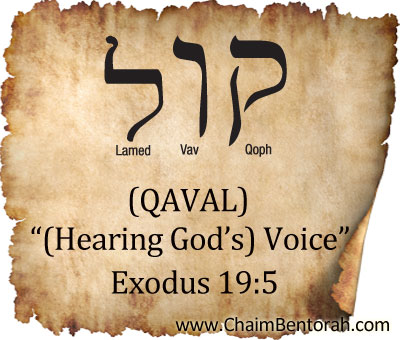
HEBREW WORD STUDY – (HEARING GOD’S) VOICE – QAVAL קול Exodus 19:5: Now therefore if you will obey my voice indeed and keep my commandments, Then you will be a peculiar treasure unto me above all the people, for all the earth is mine.” What caught my attention in this verse is the thought that
-
Hebrew Word Study – A Sensitive Nature – Pathah – Pei Taw Hei פתה Psalms 116:6: “The Lord preserves the simple, I was brought low and He helped me.” Hebrew Word Study – A Sensitive Nature – Pathah – Pei Taw Hei Psalms 116:6: “The Lord preserves the simple, I was brought low and He
WORD STUDY – ABBA אבא Mark 14:35-36: “And he went forward a little, and fell on the ground, and prayed that, if it were possible, the hour might pass from him. And he said, Abba, Father, all things are possible unto thee; take away this cup from me: nevertheless not what I will, but what