
by admin
Share
by admin
Share

HEBREW WORD STUDY – PALM BRANCHES LULAV – לולב
John 12:13: “Took branches of palm trees, and went forth to meet him, and cried, Hosanna: Blessed [is] the King of Israel that cometh in the name of the Lord.”
The people cried Hosanna which is really a Greek transliteration of the Aramaic Hoshanna which means to save, rescue or help. In this form it can be easily translated as Salvation has come. So why the palm branches?
In ancient times when someone rides into a city on a horse, it is usually to announce the presence of royalty. It could also indicate an intention to make war. Thus, when the people saw Jesus ride in on a donkey He was sending a clear message to everyone. A donkey in ancient Near East was almost universally a sign of peace. Everyone immediately understood that Jesus was not there to set Himself up as a king nor to declare His intention to overthrow the existing government. Yet, the people still cheered Him. In fact, it was this display of affection that frightened the power structure, the deep state we will call it, of the religious order of Judaism and made them determined to put Jesus to death.
It is a myth that the same people who cheered him one week cried out to execute him the following week. I have a longer version of this study where I explain the reason for this, but only a handful of people wanted Jesus executed and the evidence is clear that those who cried for his crucifixion were a minority or paid agitators.
Jesus had just come from raising Lazarus from the dead after being dead for three days. Before three days a resurrection was not unusual (death had a different determination in those days and often a person who was just unconscious would be declared dead only to awaken in a couple of days). A resurrection after three days, that was Messianic and word got out that the Messiah had truly come.
So why the cheering? I go with a different drummer than Christian thought on this. I do not believe the people were looking for a king or someone to overthrow the Roman Empire. They knew of the prophecy of a Messiah who would save them from their sins, bring them eternal salvation and they recognized Jesus as this Messiah who would save them from their sins. The cry: “Salvation has come” is the same cry we have today.
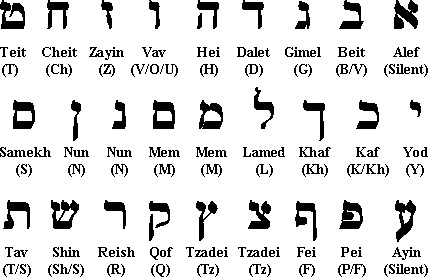
The palm branches? They mean a lot of things to different people in the Middle East, but to the Jews, the Hebrew word itself explains what it meant to them, Lulav. Lu – to or unto, Lav, heart. In other words “We give to you our hearts.”
STAY IN THE LOOP
Subscribe to our free newsletter.
Leave A Comment
Hebrew Word Study – A Passion – B’ir – Beth Ayin Yod Resh Song of Solomon 3:3, “The watchmen that go about the city found me: Saw ye him who my soul loveth?” “Ich bin ein Berliner” John F. Kennedy, June 26. 1963. Translation, “I am a jelly filled donut.” There is an urban legend

HEBREW WORD STUDY – (HEARING GOD’S) VOICE – QAVAL קול Exodus 19:5: Now therefore if you will obey my voice indeed and keep my commandments, Then you will be a peculiar treasure unto me above all the people, for all the earth is mine.” What caught my attention in this verse is the thought that
-
Hebrew Word Study – A Sensitive Nature – Pathah – Pei Taw Hei פתה Psalms 116:6: “The Lord preserves the simple, I was brought low and He helped me.” Hebrew Word Study – A Sensitive Nature – Pathah – Pei Taw Hei Psalms 116:6: “The Lord preserves the simple, I was brought low and He
WORD STUDY – ABBA אבא Mark 14:35-36: “And he went forward a little, and fell on the ground, and prayed that, if it were possible, the hour might pass from him. And he said, Abba, Father, all things are possible unto thee; take away this cup from me: nevertheless not what I will, but what