
by admin
Share
by admin
Share
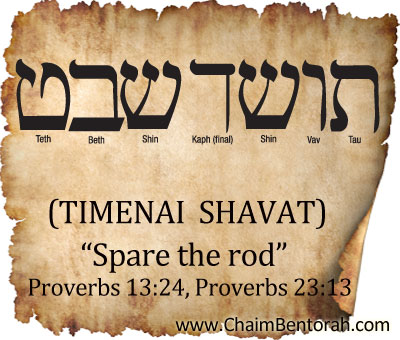
HEBREW WORD STUDY – SPARE THE ROD – TIMENAI SHAVAT תושׁכ שׁבט
Proverbs 13:24: “He that spares his rod hates his son: but he that loves him chastens him early.”
Proverbs 23:13: “Withhold not correction from the child: for if you beat him with a rod, he shall not die.”
 Did the wisest man who ever lived really instruct us to strike a child? Proverbs 13:24, 23:13, 22:15, 23:14 and 29:15 all use the same words for rod, discipline, chasten and/or correct. The word used for rod is one I immediately recognized as the same word that is used in the Aramaic which is the word for a scepter or a magistrate. In fact one use of this word in Hebrew, which in its root form shavat is for a scepter. It is the same word used in Esther 5:2 which she approaches the king and he extended or offered his scepter to her. I searched out the word scepter in the in other Semitic languages, Phoenician, Akkadian, Summarian and found the identical word that we have in the Hebrew and Aramaic, shavat and it is always used as a reference to a scepter. The scepter was universally recognized as a symbol of authority and how the authority moved his scepter displayed his desires or wishes. A king would give a scepter to an individual to provide diplomatic immunity. Scepters were carried by not only kings but priest, judges, military leaders and respected elders. These were not used to administer punishment but to confirm a verdict such as the use of a gavel today to call to order in a court or when a judge strikes his gavel to conclude and confirm a verdict. He does not beat the defendant over the head with the gavel; whatever punishment is to be rendered is done outside the court.
All these passages referring to the rod of correction found in Proverbs were written by King Solomon, who himself carried a scepter. I believe it stands to reason when he says that he who spares (Heb. timenai – withholds) the scepter hates his son, he is saying that a father who withholds his authority, refuses to establish boundaries and laws as a king does for his nation, such a father hates his son. The shavat is not a rod to beat a child with but is really a picture of a person/parent has taken on the responsibility of one who is in authority and is using his authority.
So what about this punishment chastening or beating? The word in every case in the Hebrew is musar which could come from two possible root words, masar which means to change and has nothing to do with physical punishment or yasar which means to correct or instruct and has little to do with any physical action. In fact, in other Semitic languages, yasar is exclusively used for instruction and has reserved other words to express physical punishment.
The KJV renders takenan in Proverbs 23:13 as beat and shavat as rod to get beat him with a rod. I mean the KJV is really brutal, but it was translated during brutal times and that was most likely the mindset in that day. Conservatives just followed in lockstep with them. The word takenan comes from the root word takan which is a word used to express measuring, examining and weighing out. I have no idea how the KJV arrived at the idea of beating. Using my earlier rendering of the word shavat as scepter or authority, I would not see this as beat him with a rod, but it would be more like examine his behavior with the authority of a wise king.
I know this flies in the face of conservative teaching, but I have never known God to raise a hand to me to correct my behavior or to strike me down from some infraction. His disappointment in me is enough punishment. So I could never do to a child what God has never done to me.
STAY IN THE LOOP
Subscribe to our free newsletter.
Leave A Comment
Hebrew Word Study – A Passion – B’ir – Beth Ayin Yod Resh Song of Solomon 3:3, “The watchmen that go about the city found me: Saw ye him who my soul loveth?” “Ich bin ein Berliner” John F. Kennedy, June 26. 1963. Translation, “I am a jelly filled donut.” There is an urban legend
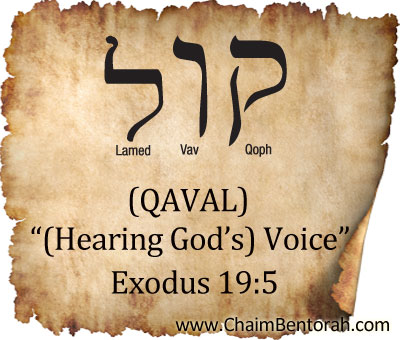
HEBREW WORD STUDY – (HEARING GOD’S) VOICE – QAVAL קול Exodus 19:5: Now therefore if you will obey my voice indeed and keep my commandments, Then you will be a peculiar treasure unto me above all the people, for all the earth is mine.” What caught my attention in this verse is the thought that
-
Hebrew Word Study – A Sensitive Nature – Pathah – Pei Taw Hei פתה Psalms 116:6: “The Lord preserves the simple, I was brought low and He helped me.” Hebrew Word Study – A Sensitive Nature – Pathah – Pei Taw Hei Psalms 116:6: “The Lord preserves the simple, I was brought low and He
WORD STUDY – ABBA אבא Mark 14:35-36: “And he went forward a little, and fell on the ground, and prayed that, if it were possible, the hour might pass from him. And he said, Abba, Father, all things are possible unto thee; take away this cup from me: nevertheless not what I will, but what