
by admin
Share
by admin
Share
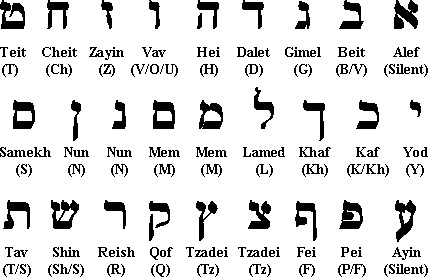
Hebrew Word Study – Venom – Chamah – חֵמָה – Cheth Mem Hei, ,
Leviticus 26:28: “Then I will walk contrary unto you also in fury; and I, even I, will chastise you seven times for your sins.” KJV
Leviticus 26:28: “I will act with furious rage against you, and I Myself will punish you sevenfold for your sins.” Berean Study Bible
I am extremely fortunate to live in Chicago where I can hop on the Stevenson Expressway and be at the University of Chicago library in fifteen minutes. The University of Chicago houses one of the best libraries on Semitic culture and languages in this country. This library allows me access to books, lexicons, and research papers that are out of print or would cost a fortune to own, even if they were still in print, many of which are not. I saw a 300 page dissertation just on the word Chased – lovingkindness. You ask how anyone could write so much about one word. As the old saying goes, “If you love it enough, it will reveal its secrets. So when I do a short study on a word, you can be sure I have not exhausted all there is to say about that word.
With that in mind, I am revisiting the word contrary as it is rendered in the KJV or furious rage as it is rendered in the Berean Study Bible. It is translations like this given by the Berean Study Bible that gives the Old Testament such a bad reputation. I specifically went to the University of Chicago to research this word chamah which is rendered as fury. I discovered from the Assyrian Dictionary of the Oriental Institute of the University of Chicago 140a.2 that the origin of this word in the Sumerian and Akkadian is imtu which is poisonous foam or venom which flows from the mouth of a snake. There is an ancient Sumerian story of seven vessels and the seventh being filled with viper venom. The word contrary qari has the idea of a misfortunate encounter or meeting. Chamah qari would have the idea of a meeting which leaves God foaming at the mouth, as if He had taken poison. Thus if we disobey God, then walking with God in an association would be like poison in His mouth. We can sin and God will endure and forgive but that seven times, not literally seven but metaphorically the seventh, the straw breaking the camel’s back is the one that finally causes God to foam as if He has been poisoned.
Would you like Chaim Bentorah as your personal Hebrew teacher?
|
|
This would make more sense to the literal rendering of af ani. Normally translators render af ani as “even I” to emphasize that God is saying that He and He alone. In other words: “Even I will chastise or punish you seven times for your sins.” The word chastise yachar means to either punish or instruct. Yet in this context as a reference to sin we can only say punish as God will not really instruct us in our sins. The context clearly has the idea of a chastisement. Yet the Medieval Rabbi Israel Ben Eliezer translates this literally as “I too” or “I also.” Rabbi Eliezer explains that the syntax really implies: “I too will be punished for your sins.” This poisonous foam coming from God’s mouth is not anger or rage over our sins; it is sin that is metaphorically poisoning God.
When we sin there is a natural consequence to our sins and we end up suffering for our sins. We are punished for our sins naturally and like a good parent, God will allow us to suffer the consequences of our sin and like a good loving parent, He will also suffer, many times even more than the wayward child. That is why, when we sin, it is like we have poisoned God.
If we truly love God we will not sin, not only because we do not want to suffer the consequences of our sins but also because we know it is like feeding poison or causing suffering to the God we love.
Hi there! Thank you for reading this Daily Word Study. Can I ask a favor? Share this Daily Word Study with your friends on Facebook and Twitter by clicking one of the icons below.
Thanks & Blessings, it means a lot to me!
STAY IN THE LOOP
Subscribe to our free newsletter.
Leave A Comment
-
Hebrew Word Study – A Passion – B’ir – Beth Ayin Yod Resh Song of Solomon 3:3, “The watchmen that go about the city found me: Saw ye him who my soul loveth?” “Ich bin ein Berliner” John F. Kennedy, June 26. 1963. Translation, “I am a jelly filled donut.” There is an urban legend

HEBREW WORD STUDY – (HEARING GOD’S) VOICE – QAVAL קול Exodus 19:5: Now therefore if you will obey my voice indeed and keep my commandments, Then you will be a peculiar treasure unto me above all the people, for all the earth is mine.” What caught my attention in this verse is the thought that
-
Hebrew Word Study – A Sensitive Nature – Pathah – Pei Taw Hei פתה Psalms 116:6: “The Lord preserves the simple, I was brought low and He helped me.” Hebrew Word Study – A Sensitive Nature – Pathah – Pei Taw Hei Psalms 116:6: “The Lord preserves the simple, I was brought low and He
WORD STUDY – ABBA אבא Mark 14:35-36: “And he went forward a little, and fell on the ground, and prayed that, if it were possible, the hour might pass from him. And he said, Abba, Father, all things are possible unto thee; take away this cup from me: nevertheless not what I will, but what